
Motor Speech Disorders
Motor Speech Disorder Evaluation and Therapy Services in the Black Hills
Comprehensive Evaluation & Treatment for Speech Movement, Coordination, and Motor Planning
Motor speech disorders occur when there are challenges with the planning, coordination, strength, speed, or accuracy of the movements needed for clear speech production. Because speech requires precise coordination of the lips, tongue, jaw, vocal system, and respiratory system, changes in the nervous system can impact how speech sounds are produced.
At DSSC, we provide comprehensive evaluation and individualized treatment for children and adults with motor speech disorders, including childhood apraxia of speech, acquired apraxia of speech, and dysarthria.
Our approach focuses on understanding the underlying cause of speech difficulties and developing functional strategies to improve speech clarity, communication effectiveness, and confidence.
Services are available in person at our Rapid City clinic and through telehealth options when appropriate.

Common Signs of a Motor Speech Disorder
Individuals may benefit from evaluation if they experience:
Speech that is difficult to understand
Inconsistent speech errors
Difficulty coordinating speech movements
Slurred or effortful speech
Changes in speech following neurological injury
Difficulty being understood by familiar or unfamiliar listeners
Frustration related to communication breakdowns
Reduced confidence communicating in daily situations
Evaluations to Get to the Root of the Issue
Our Process
A comprehensive evaluation helps determine whether speech challenges are related to motor planning, motor execution, coordination, or other communication factors.
Our evaluation may include assessment of:
Speech intelligibility
Oral motor coordination and movement patterns
Speech sound accuracy and consistency
Rate, rhythm, and prosody
Strength, tone, and range of movement
Coordination of breathing, voicing, and articulation
Receptive and expressive language skills
Functional communication needs across home, school, work, and community settings
Following evaluation, we develop an individualized treatment plan based on the individual’s communication goals, diagnosis, strengths, and functional needs.
Motor Speech Concerns We Evaluate & Treat

Childhood Apraxia of Speech (CAS)
Childhood apraxia of speech (CAS) is a motor speech disorder in which children have difficulty planning and coordinating the precise movements needed for speech. The child knows what they want to say but has difficulty organizing the movements required to produce speech sounds and words accurately.
Common characteristics may include:
Inconsistent speech sound errors
Difficulty imitating sounds or words
Increased difficulty with longer or more complex words
Limited speech intelligibility
Difficulty with sound sequencing
Groping or trial-and-error movements when attempting speech
Differences in stress, rhythm, or intonation patterns
Treatment focuses on principles of motor learning, frequent practice, and individualized strategies to improve speech movement planning and coordination.

Acquired Apraxia of Speech (AOS)
Acquired apraxia of speech occurs when a person who previously had typical speech abilities develops difficulty planning and coordinating speech movements due to neurological changes.
Common causes may include:
Stroke
Traumatic brain injury
Brain injury or neurological events
Other neurological conditions
Individuals may experience:
Difficulty initiating speech
Inconsistent speech errors
Effortful speech production
Difficulty sequencing sounds
Changes in speech rhythm or prosody
Reduced speech clarity
Treatment focuses on rebuilding speech motor planning skills, improving communication effectiveness, and developing strategies to support daily communication.
Dysarthria
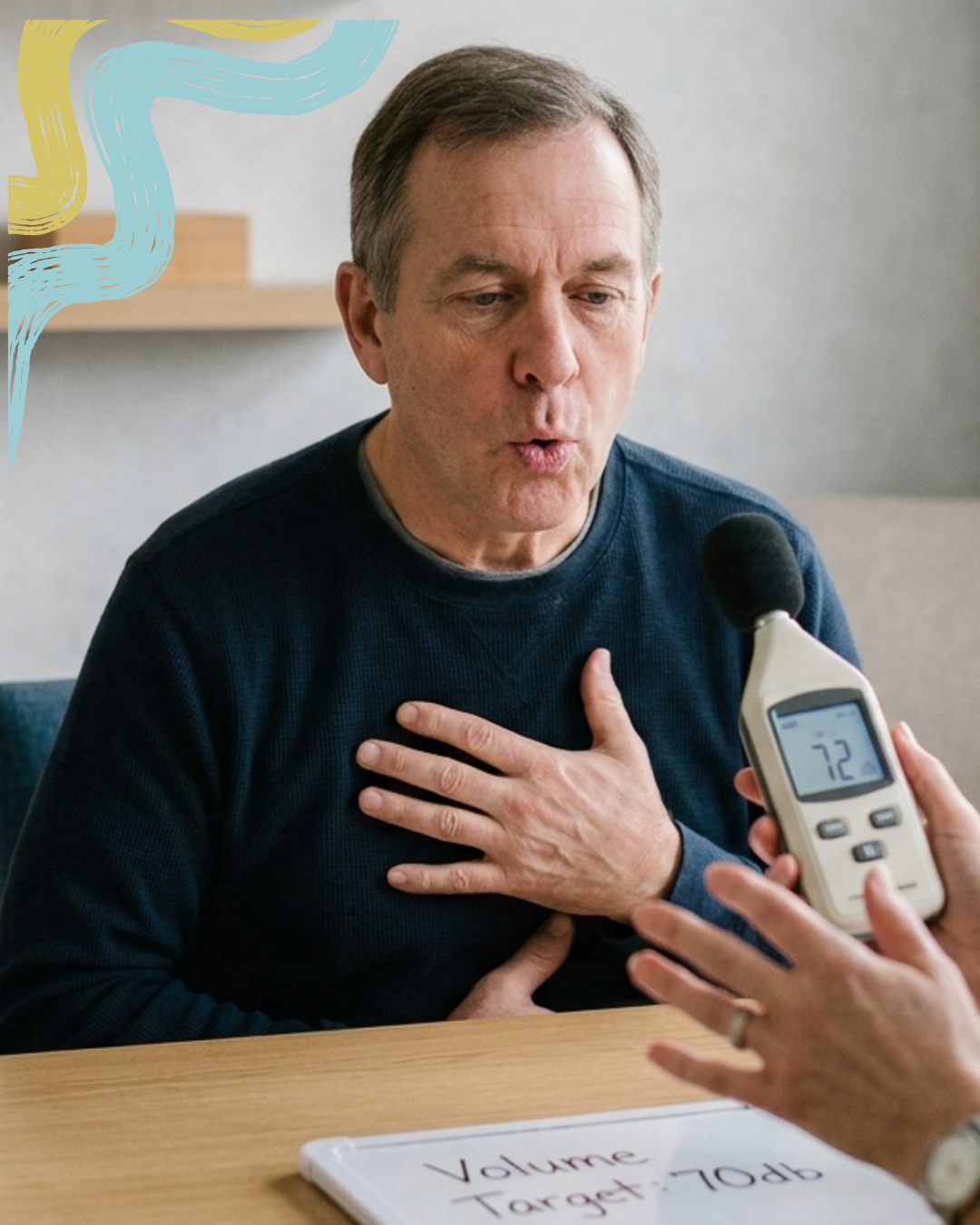
Dysarthria is a motor speech disorder caused by weakness, reduced coordination, altered muscle tone, or difficulty controlling the muscles used for speech.
Dysarthria may affect:
Breathing support for speech
Voice quality
Speech rate
Articulation precision
Loudness
Speech intelligibility
Common signs may include:
Slurred speech
Reduced speech clarity
Weak or quiet voice
Slow or rapid speech rate
Changes in pitch or vocal quality
Increased effort when speaking
Dysarthria may occur following:
Stroke
Traumatic brain injury
Parkinson’s disease
Multiple sclerosis
Cerebral palsy
Other neurological conditions
Treatment focuses on improving speech intelligibility, optimizing communication strategies, and supporting participation in daily life.